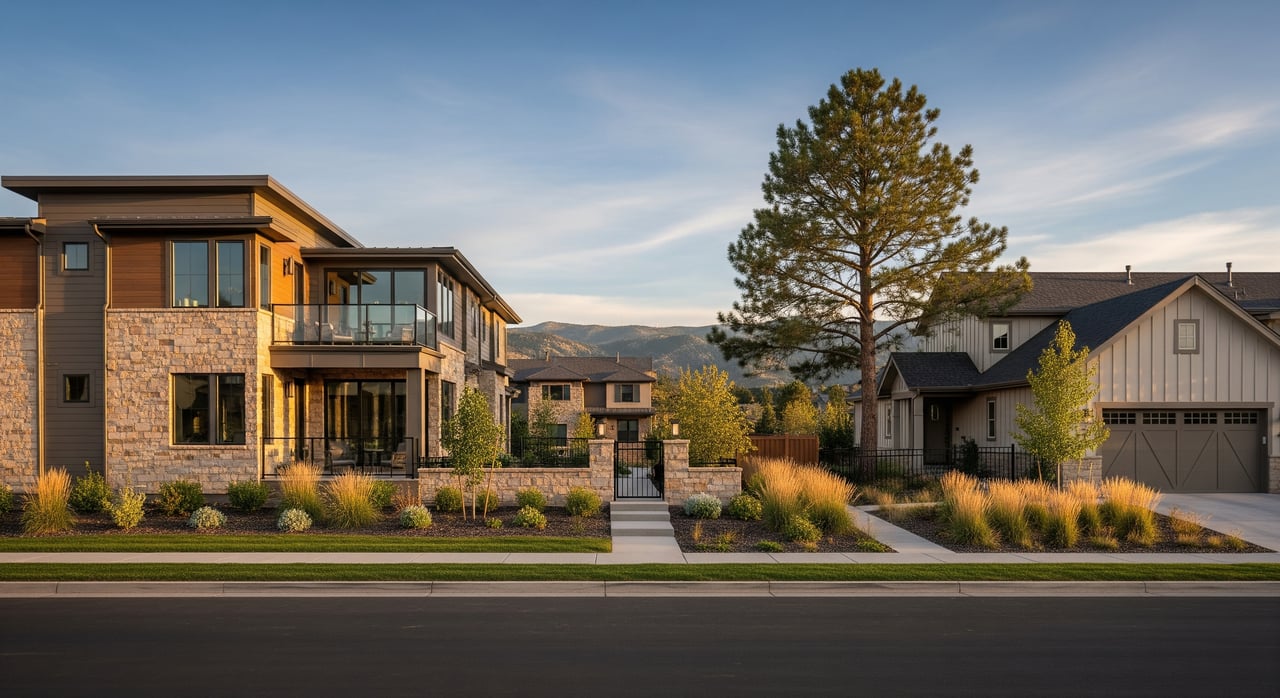
Trying to choose between a townhome and a single-family house in Parker? You are not alone. The right fit comes down to how you want to live, what you want to maintain, and how predictable you want your monthly costs to be. In this guide, you will see how ownership costs stack up, what HOAs usually cover, lifestyle trade-offs to expect, and a practical checklist to make the decision easier. Let’s dive in.
Parker housing at a glance
Parker offers both single-family homes in master-planned neighborhoods and newer townhome communities near daily amenities. You will find attached options in mixed-use areas and infill sites, plus detached homes with larger lots in suburban subdivisions. Many buyers here are families, commuters, and downsizers, so the best choice often reflects yard needs, commute time, and maintenance tolerance.
When detached inventory is tight or prices are high, townhomes can be a lower-entry option in similar locations. For current numbers like tax rates, HOA ranges in listings, and market trends, check Douglas County property records, the Town of Parker planning pages, and market reports from local industry sources.
Cost basics: purchase and financing
Price and land value
Single-family homes in Parker typically command higher purchase prices because you are buying more land per unit. Townhomes often offer a lower entry price for similar finished square footage in comparable areas. Over time, the land component can influence appreciation patterns.
Financing differences to confirm
Many townhomes and single-family homes qualify for conventional, FHA, or VA loans. Some attached projects require project approvals for certain loan types. Ask your lender early about whether the community is considered warrantable for your chosen loan, and confirm any HOA or project documentation requirements.
Monthly and annual costs you will carry
Property taxes and special districts
Your tax bill is driven by assessed value and the applicable mill levy. Detached homes with larger lots often have higher assessed values, which can mean higher taxes. Some Parker neighborhoods are in special improvement or water districts, so you should verify any district assessments in addition to county taxes.
HOA dues and what they cover
Townhome HOAs often include exterior maintenance, roof and siding, master insurance for the structure, snow removal in common areas, and common landscaping. Some include trash or bulk internet. Many single-family neighborhoods also have HOAs, but dues are usually lower and may cover only common areas or private roads.
Dues can change. Associations can raise fees or levy special assessments if reserves are low. Before you buy, request the current dues, the last 2–3 years of dues history, the reserve study, recent meeting minutes, and financials. Reviewing these helps you spot pending projects or litigation.
Insurance types and coverage
Townhome owners often carry an HO-6 policy for interior finishes and personal property, while the HOA master policy covers the exterior and common areas. Single-family owners typically carry an HO-3 policy that covers the full structure and improvements. Premiums vary by coverage, construction, and risk factors, and they can be influenced by what the master policy covers.
Maintenance and repairs
As a general guideline, single-family owners budget around 1 percent of the home’s value per year for maintenance and repairs, with higher amounts for older homes. You also handle yard care, irrigation repairs, driveways, exterior paint, roofs, decks, and snow on private drives. Townhome owners face lower hands-on maintenance for exteriors if the HOA covers it, but you still pay for it through dues and remain responsible for interior systems and any limited common elements per the covenants. Special assessments are possible if reserves fall short.
Utilities and operating costs
Townhomes can be more energy efficient per square foot because shared walls reduce exposure. Actual bills depend on insulation, HVAC efficiency, unit orientation, and construction age. Some communities include water, sewer, trash, or cable in dues, while others meter individually. Confirm metering and what is included before you write an offer.
Parking and storage
Detached homes often provide larger garages, driveways, basements, or sheds. Townhomes may have a one-car garage, assigned spaces, or a carport. If you need a workshop, RV or boat storage, or extra gear space, verify parking rules and think through off-site storage costs.
Lifestyle trade-offs in Parker
Space, privacy, and yard
Townhomes make good use of multi-level floor plans, but detached homes usually offer larger rooms and more single-level options. If you want a fenced yard for gardening or play, a single-family home will usually give you more private outdoor space. Shared walls in townhomes can mean more neighbor noise than a detached home.
Time and maintenance fit
Choose a townhome if you want less exterior upkeep and more predictable scheduling. Choose a single-family home if you want full control over landscaping, exterior finishes, and long-term projects. Your maintenance tolerance is a key decision driver.
Amenities and community rules
Many townhome communities include amenities like pools, gyms, or playgrounds. These can be cost-effective but come with rules. Single-family neighborhoods may offer parks or trails with fewer shared facilities. Review covenants, parking policies, rental restrictions, pet rules, and any design guidelines to avoid surprises.
Customization and flexibility
Detached homes typically allow more exterior changes, additions, or sheds, subject to permits. Townhome exterior changes often require HOA approval and may be limited by CC&Rs. If you anticipate significant remodeling or expansions, a single-family home may be the better fit.
Commute and daily routine
Consider how often you drive, walk, or bike to local services. Some townhome developments cluster near shops and dining, while many detached neighborhoods offer larger lots a short drive from amenities. Align the location and property type with how you live day to day.
Resale and risk factors to consider
What drives value in Parker
Location, school district boundaries, lot size, and condition are major drivers of value. Over long periods, appreciation trends for detached homes and attached units can differ because land value is a significant component for single-family homes. Buyer pools also vary by cycle.
Liquidity and time on market
At lower price points, townhomes can sell quickly when inventory is tight. Detached homes often command higher absolute prices and may take longer in certain cycles. Nearby infrastructure improvements, new development, and neighborhood amenities can move demand for both property types.
HOA governance and reserves
Before buying in an HOA, review the CC&Rs, bylaws, budget, reserve study, insurance certificate, and the last 12 months of meeting minutes. Red flags include low reserves relative to capital needs, frequent special assessments, ongoing litigation, and rising dues without clear justification.
Appraisal and project approval
Appraisers compare like with like. In Parker, comparable sales for townhomes are usually available, but unique or custom projects can create appraisal challenges. Some lenders require project-level documentation for attached units, so confirm requirements at the start of your loan process.
Quick carrying cost worksheet
Use this template to compare a Parker townhome and a single-family house side by side. Plug in numbers from specific listings and quotes.
- Mortgage principal and interest
- Property tax estimate (annual divided by 12)
- Homeowners insurance (annual divided by 12)
- HOA dues, if applicable
- Utilities and trash (monthly average)
- Maintenance reserve
- Townhome: consider interior systems and small items, such as 0.25–0.75 percent of value annually divided by 12
- Single-family: consider 1 percent of value annually divided by 12, adjusted for age and condition
- Total monthly carrying cost
Tip: Confirm whether water, sewer, or internet is included in HOA dues to avoid double counting.
Parker buyer checklist
- Budget and monthly costs
- Estimate mortgage, taxes, insurance, HOA, utilities, and a maintenance reserve.
- Features and must-haves
- Yard size, bedrooms and baths, garage capacity, storage or workshop, single-level or multi-level access.
- Maintenance tolerance
- Lower hands-on upkeep with a townhome versus more control and responsibility with a detached home.
- Lifestyle and community needs
- Private outdoor space, pets, RV or boat parking, amenities, and proximity to daily routes.
- Legal and financial due diligence
- Request HOA docs if applicable, seller disclosures, recent utility bills, and 2–3 years of repair receipts. Confirm property tax and any special district fees with Douglas County. Ask your lender about any project approvals for your financing type.
- Resale considerations
- Review recent comparable sales for both property types in the immediate neighborhood, noting days on market and pricing.
- Energy and systems
- Ask about insulation, HVAC age, electrical panel, water heater, and whether utilities are individually metered or included in dues.
- Rules and restrictions
- For HOAs, verify pet policies, rental rules, parking, and exterior modification guidelines. For detached homes, review municipal codes and any neighborhood covenants.
How we can help
You do not have to answer every question alone. You can compare real monthly costs, read HOA documents with context, and pressure-test resale assumptions with a local advisor by your side. As Brokers, Advisors, and Investors, our team pairs on-the-ground Parker knowledge with a clear, education-first process so you can choose confidently.
If you want a side-by-side breakdown for a specific Parker townhome and house, or help reviewing HOA reserves and dues history, reach out to our team at The Colorado Agents. We will tailor the analysis to your goals, budget, and timeline.
FAQs
Will an HOA make ownership cheaper in Parker?
- Not necessarily. HOAs shift many variable exterior costs into fixed dues, which can add predictability. Your total cost depends on dues plus what the HOA covers compared with paying for those items yourself in a detached home.
Do Parker townhomes cost less to heat and cool?
- Often yes. Shared walls can lower heating and cooling loads, but actual energy use depends on insulation, HVAC efficiency, unit orientation, and construction age.
Are Parker townhomes harder to finance than houses?
- Some attached projects require additional lender or project approvals, especially for certain loan types. Many townhomes still qualify for conventional, FHA, or VA loans. Check with your lender early.
What is the risk of special assessments in Parker HOAs?
- The risk exists if reserves are low or unexpected repairs occur. Review the reserve study, recent meeting minutes, and budgets to assess the likelihood of future assessments.
Which has better resale in Parker, a townhome or a house?
- It depends on neighborhood demand and price point. Single-family homes often capture demand for land and private yards, while townhomes can be more liquid at lower entry prices in certain cycles.
What documents should I review before buying in a Parker HOA?
- Review CC&Rs, bylaws, the current budget, reserve study, insurance certificate, and the last 12 months of meeting minutes, and ask about any pending litigation or planned projects.