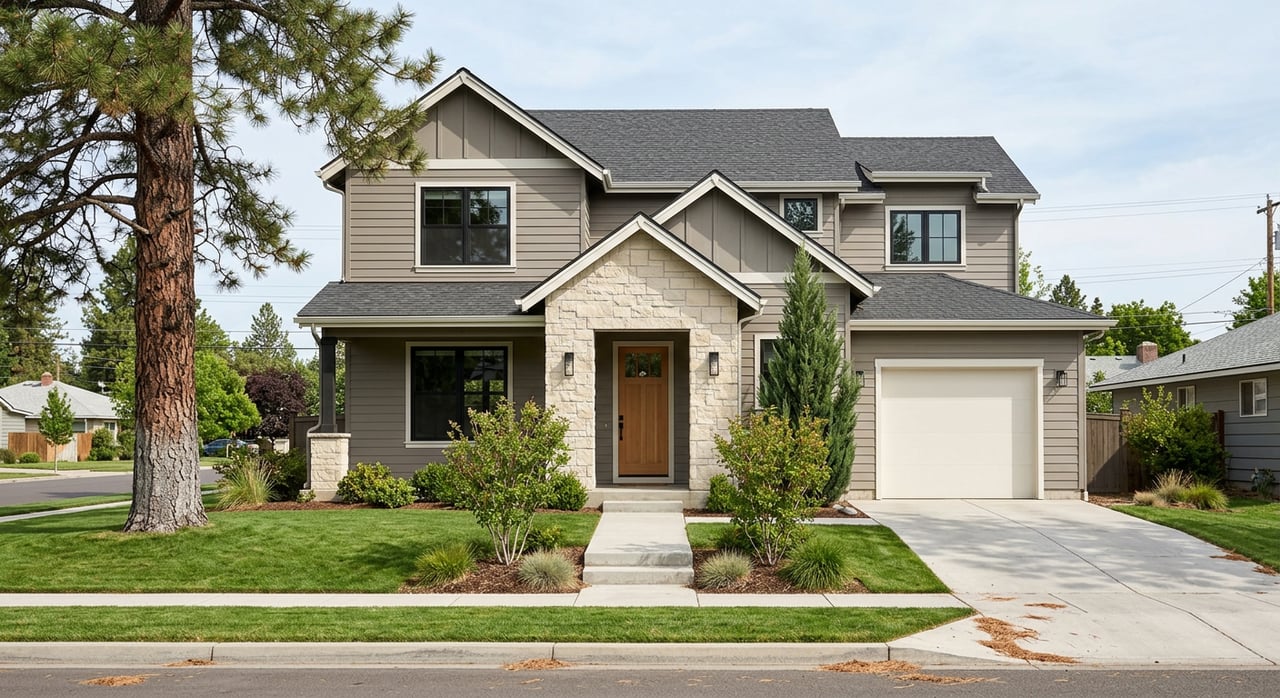
Want steady cash flow without the nightly turnover grind? If you are eyeing Lakewood for furnished rentals, mid-term stays of 30 days or more can offer reliable occupancy and simpler operations than short-term hosting. You might be wondering how the city treats 30+ day leases, what monthly rates look like, and which properties actually work. This guide gives you the rules, rent signals, product fit, underwriting steps, and a clear plan to get started in Lakewood. Let’s dive in.
Mid-term rentals in Lakewood: rules that matter
Mid-term rentals are typically furnished leases of roughly 30 days to several months. Industry platforms position them this way, and average stays on mid-term channels often run around three months. If you want a primer on the model, read this overview of mid-term rentals from Furnished Finder’s industry blog.
Lakewood defines a Short-Term Rental as a rental for 29 days or fewer. That means 30+ day furnished leases generally fall outside the city’s STR category and are treated like standard residential leases. You can confirm this in the City of Lakewood’s adopted ordinance for short-term rentals. If you plan any hosting under 30 days, the city requires an STR license and enforces items like proof of primary residence and inspections.
Zoning rules and ADU policy are also active areas for the city. Lakewood maintains updates to its zoning articles and references changes effective January 1, 2026 on the city site. Before you buy, review the city’s Zoning Ordinance page, and if you are evaluating an ADU, verify the exact language and any recorded conditions on the property.
Quick compliance checklist
- Confirm your stays are 30+ days if you want to avoid the STR license route. For any <30-day plan, study the city’s STR license page and requirements.
- Check HOA covenants, condo bylaws, and building rules. Some communities restrict furnished or short-duration leases.
- Align insurance with your use. Ask your insurer to confirm coverage for furnished monthly rentals and any exclusions for transient use.
- If your financing involves FHA or a HUD-insured product, remember those programs restrict hotel or transient use under 30 days. Mid-term leasing aligns with 30+ day stays, but confirm your loan documents.
- For ADUs and accessory units, validate what the zoning allows today and whether any Notice of Condition limits rental terms.
Who rents mid-term in Lakewood
Lakewood benefits from year-round demand drivers that naturally suit 30+ day stays. Major employers and institutions include the Denver Federal Center, Jefferson County school district, St. Anthony Hospital, Terumo BCT, and Red Rocks Community College. These anchors bring in contractors, traveling clinicians, instructors, and relocating employees on defined assignments. See a snapshot of top local employers for context.
Transit and amenities shape renter choice too. Access to the RTD W Line, walkable retail at Belmar and Union Square, and proximity to Red Rocks Amphitheatre all add appeal for corporate and medical tenants. This neighborhood guide highlights the W Line stations and nearby conveniences many mid-term renters value.
What to buy and where it works
The most stable mid-term demand in Lakewood tends to concentrate around studios, 1-bedroom, and 2-bedroom properties. Think well-located condos near Belmar, along the Union Boulevard and Wadsworth corridors, and close to the Denver Federal Center. Duplexes, townhomes, and smaller single-family homes can also perform if they are near employers or transit and priced in line with the market.
When you scout properties, look for the following:
- Walkable amenities or quick access to the W Line for easy commutes
- On-site or in-unit laundry and reliable parking options
- Buildings that allow 30+ day furnished leases and do not prohibit sub-60-day terms if you plan any hybrid strategy later
- Floor plans that photograph well and support a simple workspace setup
Must-have amenities for 30+ day guests
- Fast internet and a dedicated or adaptable workspace
- In-unit laundry or convenient building laundry
- Clear, all-in pricing with utilities included or capped
- Durable, neutral furnishings with complete kitchen and linen setups
- Simple move-in experience with keyless entry and a clear lease
Pricing and underwriting basics
Start with public rent indices for your unfurnished baseline, then layer in mid-term comps and seasonality.
- Baseline long-term rents: As of February 2026, public sources show Lakewood median or average monthly rents near these levels: Zumper about 1,580 dollars, RentCafe around 1,798 dollars, and Zillow roughly 1,668 dollars. Use each tool to pull 1-bedroom and 2-bedroom medians for your target micro-area.
- Mid-term comps: Check live 30+ day furnished listings on monthly-focused platforms. Industry data shows average stays on those channels run several months and often command a premium over unfurnished leases.
- Seasonality and STR signals: Short-term market analytics for Lakewood indicate an average daily rate near 160 dollars and occupancy around 51 percent on nightly platforms. This helps you understand event peaks and shoulder months, even if your focus is 30+ day bookings.
Common modeling ranges to test
- Rent premium: Model furnished mid-term rent at about 20 to 50 percent above local unfurnished baselines, depending on location, product, and amenities.
- Occupancy: Use 60 to 75 percent for conservative underwriting. If you are near the hospital or federal campus and see active monthly demand, test 75 to 90 percent as a market case.
- Turnovers: Expect fewer cleans and turnovers than nightly STRs. Many mid-term operators plan for 3 to 6 placements per year.
- Management: Mid-term management fees commonly fall around 8 to 20 percent of collected rent, depending on service level.
- Furnishings and setup: Budget roughly 2,000 to 6,000 dollars for a functional 1-bedroom, and 3,500 to 12,000 dollars for a 2-bedroom. Include a small reserve for replacements.
- Utilities and internet: If you include utilities, model 100 to 300 dollars per month based on size and season.
- Reserves: Hold 3 to 6 months of operating costs while you build repeat clients and agency relationships.
A simple example scenario
- Baseline rent: Assume an unfurnished 1-bedroom baseline near 1,650 dollars from public indices in your target area.
- Mid-term premium: Price at a 35 percent uplift for all-in furnished monthly, about 2,225 dollars.
- Occupancy: Model 80 percent market-case occupancy near key employers. Effective monthly income averages around 1,780 dollars.
- Costs: Estimate 12 percent management (about 213 dollars at collected rent), a 200 dollar utilities allowance, and a 50 dollar turnover reserve averaged across the year. If you amortize a 4,000 dollar furnishing package over 36 months, that is about 110 dollars per month.
- Outcome: With these sample inputs, your monthly net before mortgage and taxes is roughly 1,780 minus 213 minus 200 minus 50 minus 110, or about 1,207 dollars. Run versions for 60 to 90 percent occupancy and for 20 to 50 percent pricing premiums to understand downside and upside.
Numbers will vary by location, unit quality, and channel performance. The goal is to pair real neighborhood comps with conservative scenarios before you buy.
Financing and lender questions to ask
Financing terms can shape what is possible, especially around lease length and how lenders count income.
Ask prospective lenders:
- Will you underwrite to projected furnished monthly rent, and what documentation do you require for DSCR-style loans?
- What DSCR and LTV thresholds apply for investor financing on a furnished monthly property?
- Are there any restrictions on ADUs or accessory units for this loan program?
- If this starts as a primary residence, what seasoning and notice rules apply before converting to a rental?
Important note for FHA and HUD-insured loans: long-standing rules prohibit hotel or transient use under 30 days while the insurance is in place. Mid-term leasing aligns with 30+ day stays, but you should verify your loan’s specific covenants and forms.
Operations that win repeat bookings
If you plan to self-manage or hire a manager, clarity and responsiveness drive renewals and reviews.
Questions for a property manager:
- What experience do you have placing travel clinicians and corporate guests in Lakewood and West Denver? What fill rates can you share?
- Which channels will you use for 30+ day bookings, how are rates set, and what fees apply?
- How do you screen applicants and structure extensions for 60 or 90 days?
- What is your management fee and what services are included? Ask for a sample owner statement.
- How are damages handled and documented for furnished units, including inventory lists and move-in photos?
- What vendors and response times do you commit to between bookings?
Owner must-haves:
- A clear, attorney-reviewed furnished mid-term lease with payment terms, utility allocations, and damage language.
- Insurance that explicitly covers furnished monthly rentals. If you ever consider sub-30-day nights, confirm acceptance in writing.
- A simple, consistent setup for access, cleaning, and maintenance, with a local contact for quick issues.
Step-by-step plan for a Lakewood deal
Confirm the local rules for your target parcel. Review the city’s STR ordinance, the STR license page, and the zoning ordinance to verify 30+ day use and any ADU specifics.
Build comps. Pull 1-bedroom and 2-bedroom medians from Zumper, RentCafe, and Zillow, then gather live 30+ day furnished listings in the same micro-neighborhood to estimate your achievable rent.
Underwrite two cases. Conservative case: 20 percent premium and 60 to 70 percent occupancy. Market case: 35 to 50 percent premium and 75 to 90 percent occupancy near hospitals or the federal campus. Include furnishings, utilities, cleaning, and reserves.
Talk to lenders. Ask about DSCR options, acceptable income evidence for furnished monthly units, and any owner-occupancy or seasoning requirements. If an FHA or HUD-insured loan is in play, confirm the 30+ day standard and any prohibitions on shorter stays.
Interview 2 to 3 property managers who place monthly furnished tenants. Request references from other mid-term owners and examples of corporate or travel-nurse placements.
Verify HOA and building rules in writing. Many associations require minimum lease terms or approvals. Keep copies for your file and listing notes.
Ready to invest with confidence
Lakewood’s clear STR definition creates space for 30+ day furnished leasing, and the city’s steady base of federal, medical, and education employers supports demand year-round. If you focus on well-located 1- and 2-bedroom units, price using real neighborhood comps, and run disciplined underwriting, mid-term can be a practical, lower-friction strategy here.
If you want help sourcing the right property, building a local pricing model, or connecting with lenders and managers, reach out to The Colorado Agents. Our investor-focused approach pairs neighborhood insight with practical revenue planning so you can buy with confidence.
FAQs
What is the difference between short-term and mid-term rentals in Lakewood?
- Lakewood defines short-term rentals as 29 days or fewer, while 30+ day furnished leases are generally treated as standard residential rentals under the city ordinance.
Do I need a city license for 30+ day furnished rentals in Lakewood?
- The city’s STR license applies to rentals under 30 days, so 30+ day stays typically do not require an STR license, but you must follow landlord-tenant law, HOA rules, and zoning.
Which Lakewood areas work best for mid-term investing?
- Target properties close to demand and transit like Belmar, Union Boulevard and Wadsworth corridors, the Denver Federal Center, and W Line stations to shorten commutes for corporate and medical tenants.
How much more can furnished mid-term units earn over unfurnished?
- A common starting range is about 20 to 50 percent above unfurnished baselines, then refine pricing with live 30+ day comps in your specific micro-neighborhood.
What amenities do mid-term renters value most?
- Fast internet, a simple workspace, in-unit or easy laundry access, clear all-in utilities, durable furnishings, and keyless entry tend to drive bookings and renewals.
How do HOAs affect mid-term rentals in Lakewood?
- Many HOAs set minimum lease lengths or require approvals, so get the covenants and written confirmation that 30+ day furnished leasing is allowed before you buy.
References for links in this guide:
- Furnished mid-term definition: Furnished Finder industry blog
- Lakewood STR ordinance and licensing: City of Lakewood
- Zoning rules: City of Lakewood Zoning Ordinance page
- Employers and amenities: Livability and an area neighborhood guide
- Rent signals and seasonality: Zumper, RentCafe, Zillow, and AirROI